As climate change intensifies, community-based watershed management is emerging as a strategic solution to secure water resources in Kenya. In a country where 85% of the land area is classified as arid and semi-arid land, water resilience has become a critical priority for agriculture, domestic use, and ecosystem preservation.
Climate Change and Increasing Pressure on Water Resources
Climate change is fundamentally altering global hydrological systems. Disruptions in rainfall patterns, prolonged droughts, and rising evaporation rates are placing unprecedented pressure on water availability.
In arid and semi-arid regions, evapotranspiration often exceeds precipitation, further weakening hydrological systems. According to the World Bank’s Climate Change Knowledge Portal, approximately 85% of Kenya’s land area falls within these vulnerable ecosystems.
In this context, securing water supply has become a central pillar of climate resilience and sustainable development.
Why Adopt an Integrated Watershed Management Approach?
Strengthening water resilience requires moving beyond fragmented responses. Integrated watershed management relies on coordinated planning and implementation of key measures, including:
- Rainwater harvesting
- Groundwater recharge
- Efficient irrigation technologies
- Watershed protection
This approach recognizes the interactions between soil, water, and landscape, translating plans into measurable and concrete actions on the ground.
Community Participation at the Core of Water Security
Water management is not solely a technical challenge; it is also a social one. Inclusion and community participa tion are essential to achieving sustainable outcomes.
Effective watershed management depends on communities’ capacity to collectively manage soil, water, and landscape resources.
The Commitment of INADES-Formation Kenya in Kenya’s Arid Counties
Within this framework, INADES-Formation Kenya is implementing a watershed management project in the counties of:
- Machakos County
- Makueni County
- Kitui County
- Kajiado County
The initiative brings together communities and stakeholders to sustainably plan and manage land and water resources within targeted watersheds.
WRUAs: Pillars of Local Water Governance
In Kenya, Water Resource Users Associations (WRUAs) are community-based organizations responsible for managing and protecting local land, soil, and water resources. They play a crucial role, particularly in arid and semi-arid regions, by:
- Promoting watershed conservation
- Coordinating water use
- Preventing and resolving water-related conflicts
Currently, INADES-Formation Kenya collaborates with four WRUAs: Ikolya and the Upper, Middle, and Lower Mwitasyano WRUAs, providing a structured framework for participatory planning and sustainable watershed management.
Ikolya River: Community-Led Restoration in Action
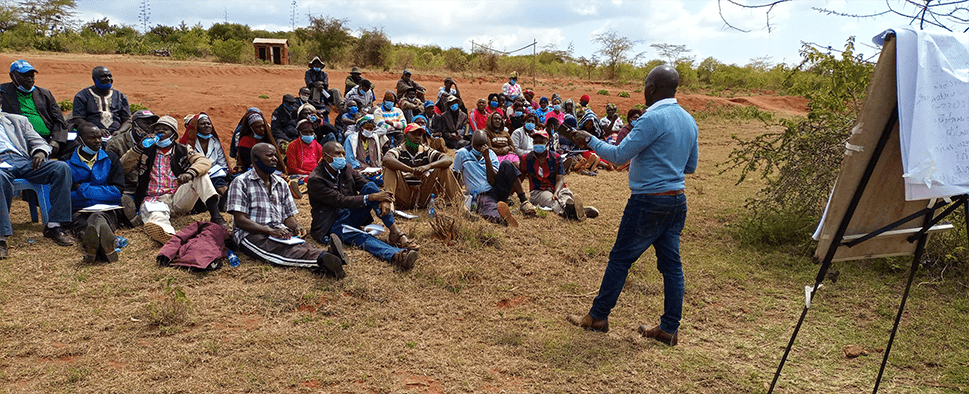
Following the establishment of the WRUA in 2021, community members in the Ikolya watershed began a participatory process to restore their degraded environment. Through community meetings and field assessments, they identified major challenges affecting the watershed, including unstable riverbanks, excessive sand harvesting, soil erosion, and sections of the river that had dried up.
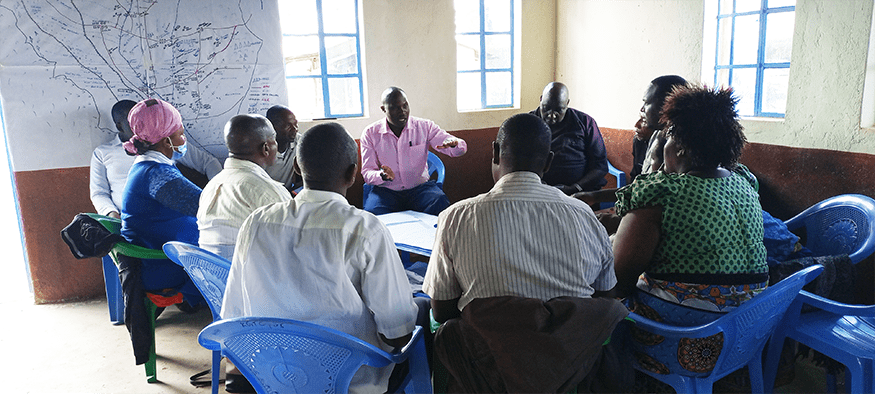
Community representatives conducted a transect walk across the watershed to better understand the extent of degradation. This exercise informed the development of a Sub-Catchment Management Plan (SCMP), a community-led plan that guides the protection, restoration, and sustainable use of land and water resources in the watershed.
Key Restoration Actions
Guided by the SCMP and supported by partners, the community implemented several practical restoration measures, including:
- Controlling unsustainable sand harvesting along the river
- Construction of sand dams to improve water retention and groundwater recharge
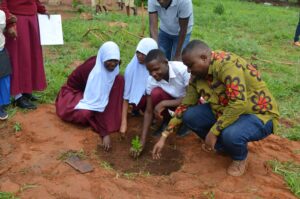
- Planting vetiver grass and establishing riparian vegetation buffers to stabilize riverbanks
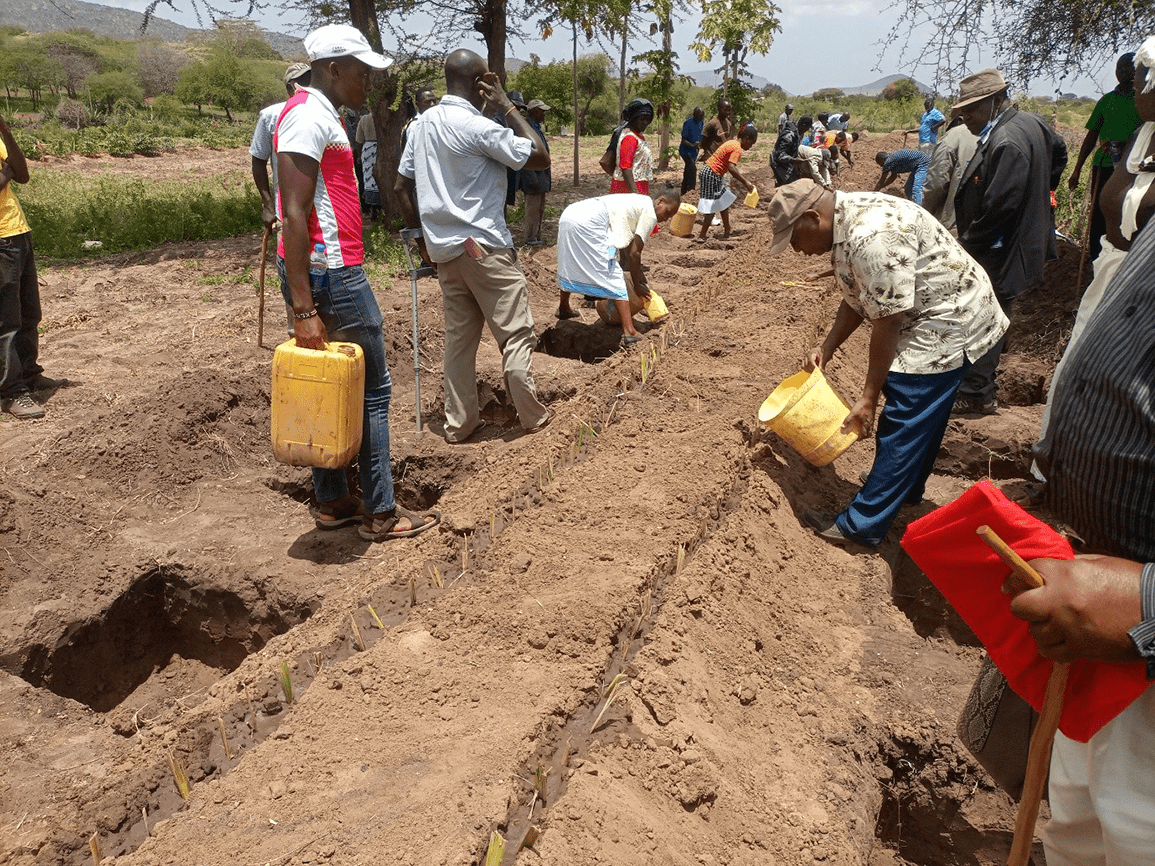
Groundwater levels have also improved. Boreholes and shallow wells that had previously run dry are now functioning again, providing water for domestic use and small-scale irrigation.
Impact on Community Livelihoods
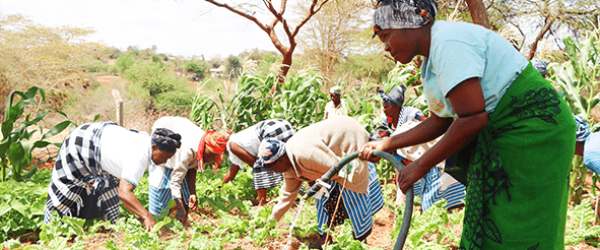
The transformation of the watershed has improved water availability and strengthened livelihoods for local communities. Farmers are increasingly engaging in horticulture and irrigation farming, while crops such as Napier grass and bananas grown along the riverbanks support livestock feeding and household food security.
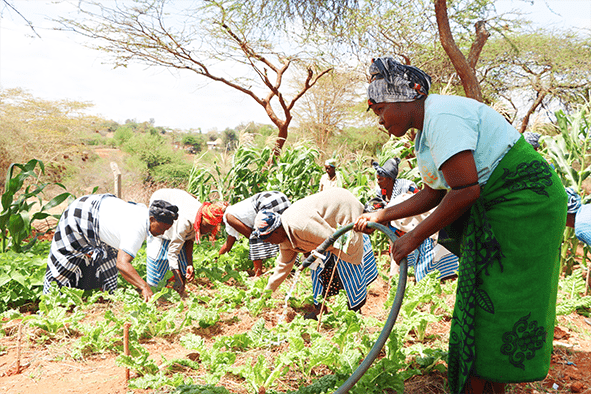
To date, the restoration of the Ikolya watershed is currently benefiting approximately 9,456 community members, who now have improved access to water and more sustainable livelihood opportunities.
Community-Based Watershed Management as a Driver of Climate Resilience
Integrated watershed management demonstrates that restoring land and hydrological systems can simultaneously:
- Improve Livelihoods
- Strengthen Climate Resilience
- Secure water resources for future generations
When communities are placed at the center of interventions, the impacts are sustainable over time.
Communication – INADES-Formation Kenya