Esse Micro-Interventions spread innovative agroecological practices

Les femmes et les jeunes de la Case de semences d’Esse se forment sur la fabrication du Biochar

Partager cet article

Share on facebook
Share on linkedin
Share on twitter
Share on email

From January 14 to 16, 2026, INADES-Formation Cameroun’s micro-interventionists in the Centre region, Mefou and Afamba departments, Esse district, conducted a series of community replications aimed at building the agroecological capacities of local producers. These activities took place in the localities of Mbembedjou, Esse village and Nsimi-bikoue.

These practical sessions focused on three major themes, which had emerged from the initial training received: the ecological breeding of cockchafer beetles, biochar production and the organic cultivation of watermelon combined with okra. Through field demonstrations, participatory exchanges and practical exercises, beneficiaries were able to acquire environmentally-friendly techniques adapted to their local realities.

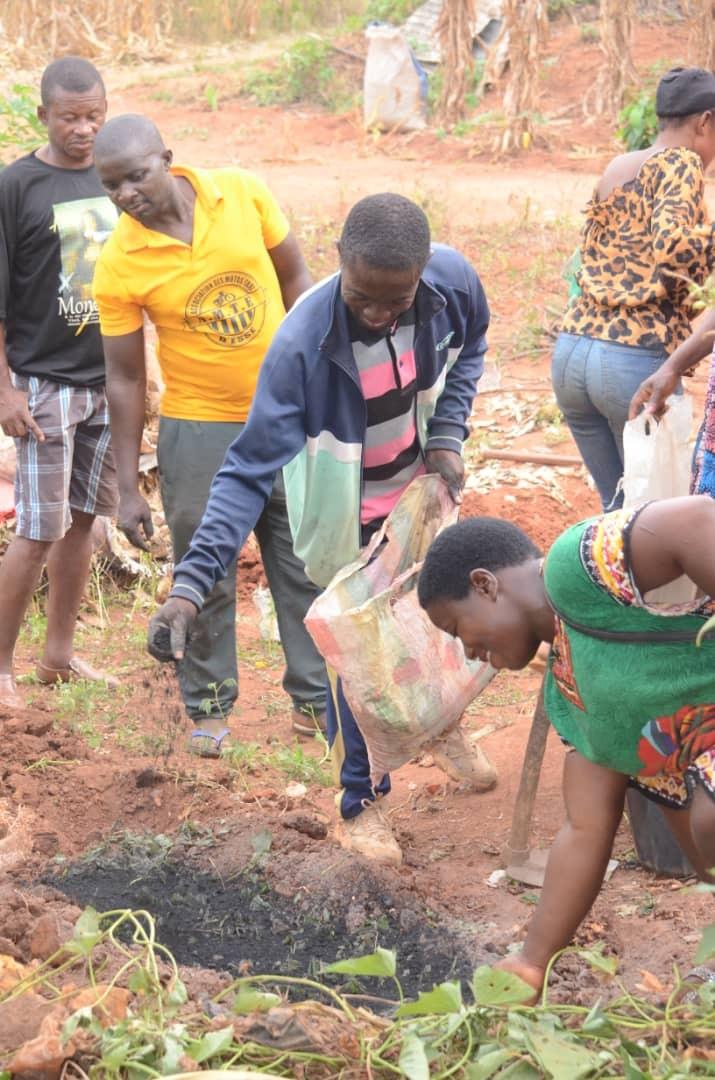
For Catherine Okomo Senguele, biochar trainer, these replications are an important lever for the agroecological transition:
“Biochar is a simple, local solution for sustainably improving soil fertility. Seeing producers understand the process and take ownership of the technique is very encouraging for the future”, she emphasized.
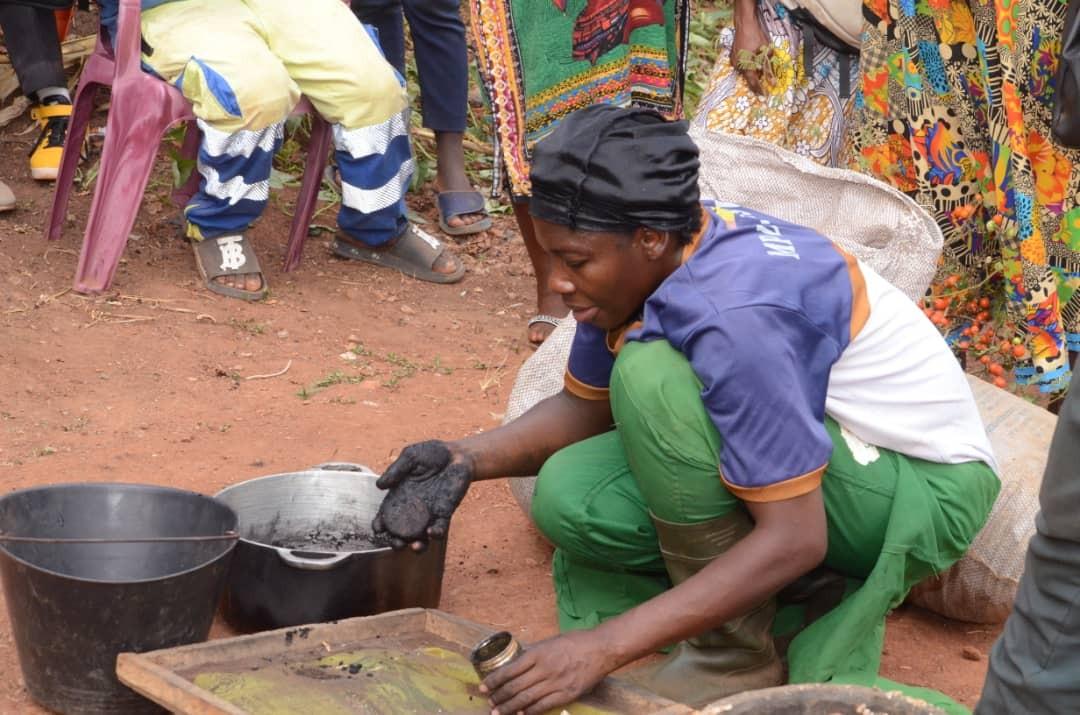
Catherine Okomo Senguele molding biochar Catherine Okomo Senguele molding biochar

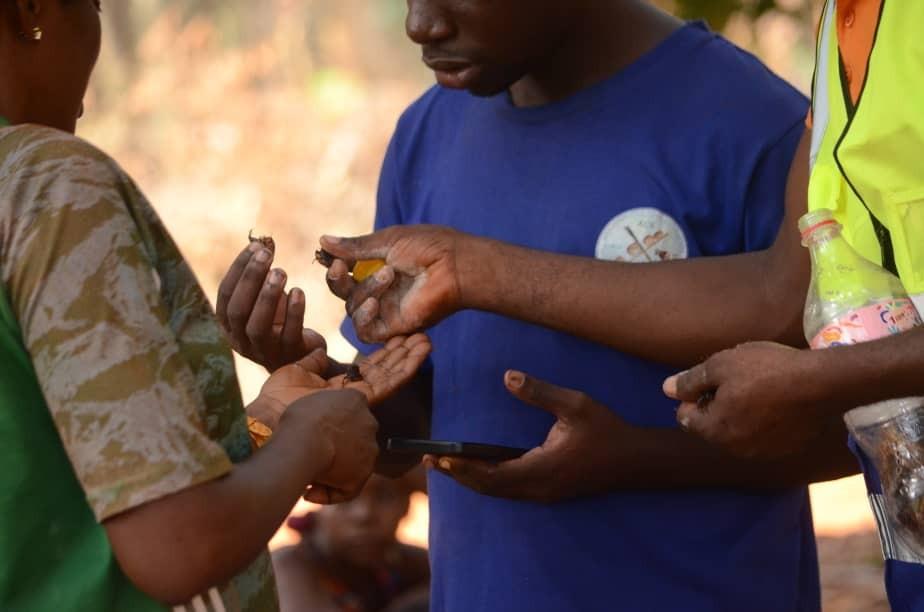
Ecological cockchafer farming, presented as a sustainable alternative to animal feed, attracted particular interest from participants due to its low implementation costs and economic potential. Edzengte Christian, a trainer on the subject, was delighted with the enthusiasm observed in the field:“Producers are realizing that raising beetles can reduce their expenditure on animal feed while creating a new source of income. It’s an accessible innovation that meets their needs”, he explained.
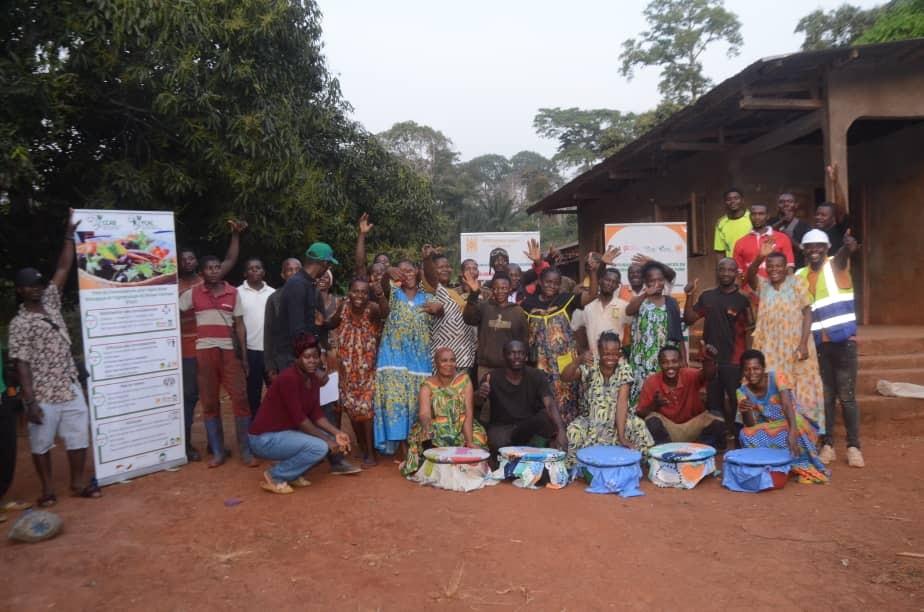
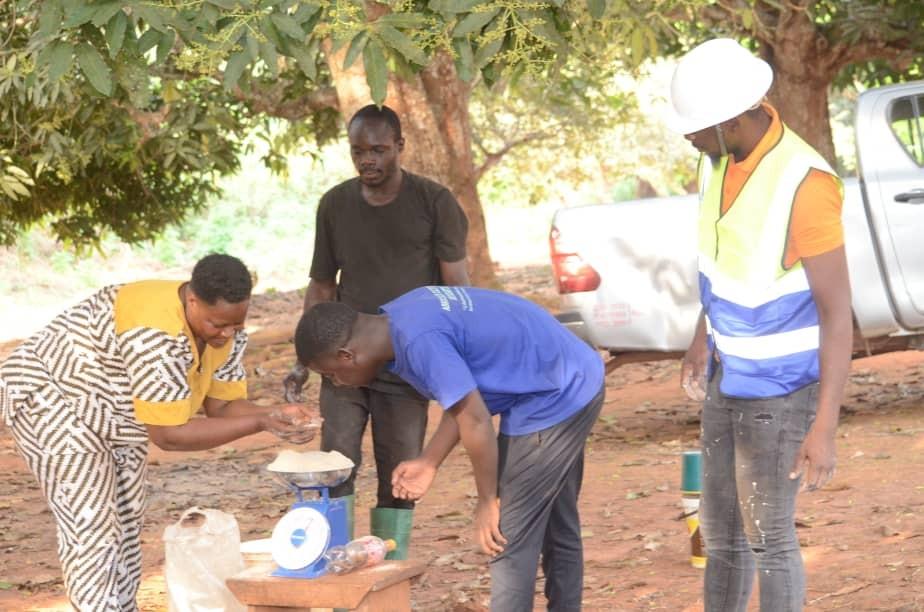
Family photo at the end of the training course on cockchafer breeding Family photo at the end of the training course on raising cockchaferHow do you distinguish between male and female spawners? How to distinguish between male and female spawners?The ingredient weighing session Weighing the ingredients
For its part, the organic cultivation of watermelon in association with okra was presented as a practice that improves productivity, soil protection and diversification of farm income. Awoumepe Williams, a trainer on the subject, emphasized the importance of crop association:“The watermelon-gumbo association allows for better soil occupation and limits pest attacks. Growers understand that it is possible to increase yields without resorting to chemical inputs”, he said.

[Preparing the soil before seeding Preparing the soil before seeding
Beneficiaries have made no secret of their satisfaction. In Mbembedjou, a grower commented: “These training courses are very practical. We’ve learned techniques that we can apply immediately in our fields”.

In Esse village, a participant adds: “We can now see that agroecology can really improve our harvests and incomes, while protecting our land”.

These replications reflect INADES-Formation Cameroun’s determination to promote agroecology through peer-to-peer learning, by turning Micro-Intervention leaders into true knowledge relays within rural communities.

Through these actions, INADES-Formation Cameroun confirms its role as a key player in supporting communities towards more resilient, ecological and income-generating agriculture.

This activity is implemented within the framework of the Pôle de connaissances pour l’Agriculture biologique et l’Agroécologie en Afrique Centrale project.

Marguerite MOMHA, Communication INADES-Formation Cameroun
Continuez votre lecture...

ABCD2 project

Projet ABCD-Un élève un arbre COP28

1. Project title

Supporting the scaling-up of community experiences and citizen monitoring of public policies in response to climate change in sub-Saharan Africa (ABCD 2 project)

2. Summary

The project to scale up community experiences and dynamics of citizen monitoring of public policies in the face of climate change in sub-Saharan Africa is the continuation of an initial project to capitalize on these experiences.

In fact, in 2022, with funding from the Basque Agency for Development Cooperation (ABCD), Inades-Formation carried out the “Study-capitalization of good practices in the face of the challenges of climate change and local governance in sub-Saharan Africa ” project, which capitalized on 50 experiences, including 31 climate change adaptation experiences and 19 governance experiences in 11 sub-Saharan African countries.

Based on the results of this pilot project, we have been able to identify and capitalize on some of the living realities of community efforts to combat the problems posed by climate change in Africa. They have been developed by a variety of players, including public services specializing in environmental and climate change management, civil society organizations and farmers’ organizations.

This second phase of the project, which will run for 30 months (2022-2024), aims to (i) scale up these good experiences developed by communities in African countries, in terms of adaptation, mitigation and resilience to climate change and of (ii) support the dynamics of citizen monitoring of the associated policy and regulatory frameworks.

ACF-AO project

WhatsApp Image 2023-08-24 at 15.13.12

1. Project title

Feminist Climate Action Project – West Africa ACF-AO

2. Summary

The “Feminist Climate Action in West Africa” project is being implemented in Côte d’Ivoire to contribute effectively to the resilience and fight against the effects of climate change by ecologically sensitive coastal and island communities, with a particular focus on rural women and young people.

It will build the capacity of communities, particularly women and young people, to implement strategies to protect biodiversity and ecosystems, notably through the adoption of agroecological practices, energy diversification and advocacy. It will strengthen the participation of rural women and young people in local governance of biodiversity and climate action.

Funded by Global Affairs Canada | Affaires mondiales Canada, the ACF AO project is taking place in Côte d’Ivoire, Guinea-Bissau, Senegal and Togo.

It is managed in Côte d’Ivoire by SUCO and Inades-Formation – Secrétariat Général.

FONDAFRICA LOGO

FondAfrica

Inades-Formation
Serving the Common Good

FondAfrica

Inades-Formation thanks you for your support for its actions of economic and social development in favor of the rural world.

Your donation will be forwarded to the recipient you have chosen.

Follow us by subscribing to our newsletters.

Inades-Formation
Serving the Common Good

FondAfrica

1. What is it?

The African Rural Development Fund (ARDF) was established on July 23, 1997 in Dar-es-Salaam, Tanzania, following the realization that Africa’s development can only be achieved through self-financing.

FondAfrica is an appeal to public generosity through collection actions from natural and legal persons.

2. Why make a donation?

FondAfrica is a particular instrument of Inades-Formation’s financing strategy. FondAfrica a formulé sa vision à moyen terme ainsi qu’il suit « In 10 years, thanks to the income from the funds collected by Fondafrica, Inades-Formation will have increased its self-financing capacity for services rendered to the African rural world to 40 % ».

Do you want to support Inades-Formation in its economic and social development actions for the rural world? If so, then take action through FondAfrica by making a donation.