REPAC trains organic farmers in the highland and bimodal forest agroecological zones on compliance with COAM’s specifications, mechanisms, and certification procedures

WhatsApp Image 2026-11-17 at 11.31.17 (1)

Partager cet article

Share on facebook
Share on linkedin
Share on twitter
Share on email

From November 20 to 22, 2026, the Network for the Promotion of Agroecology in Cameroon (REPAC), through the Cameroon Organic Agriculture Movement (COAM), conducted a series of training sessions for organic farmers in the Western Highlands and the bimodal forest zone. At the conclusion of these sessions, 75 of the 76 participants joined the ecological and organic agriculture movement, marking a new milestone in the development of the organic sector in Cameroon.

The development of organic farming in Cameroon has reached a new milestone. In Bandjoun, in the West Region, and in Souza, in the Littoral Region, REPAC has strengthened its support for organic producers through training sessions organized as part of the COAM. This initiative aims to familiarize producers with the requirements of organic farming and to encourage their participation in a national effort to promote and recognize organic products.

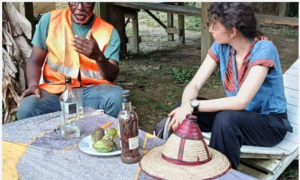
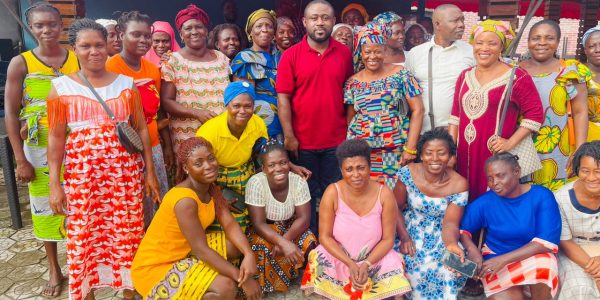
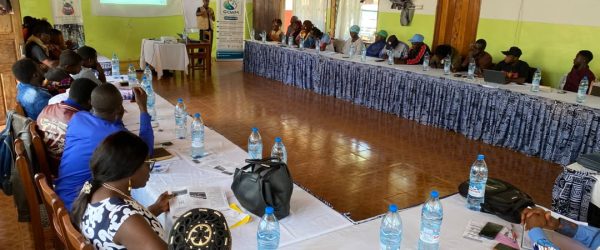
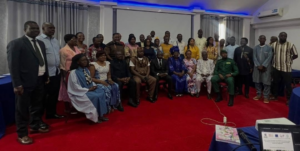
The training tour for organic farmers kicked off in the Hauts Plateaux agroecological zone in the West Region at the CPF in Mbouo Bandjoun, which hosted the first cohort of 40 producers, processors, distributors, and transporters, all of whom have committed to complying with the specifications required to obtain COAM certification.

Subsequently, the training sessions continued in the bimodal agroecological zone, specifically in the town of Souza, at the DUCA Agropastoral Vocational Training Center, which hosted the second cohort of trained operators, comprising 37 producers, 35 of whom are COAM members.

A total of 75 operators out of the 77 who participated in the sessions. This level of participation reflects producers’ growing interest in COAM and their desire to adopt a structured approach to organic production.

These training sessions also involved REPAC member organizations as local liaisons, ToToT trainer teachers, as well as Agropastoral Advisors in agroecology designated as COAM Experts, to conduct organic farming audits for operators engaged in the certification process.

The goal was to train and build the capacity of various stakeholders on the organic production standards in effect in Cameroon, compliance with specifications, and the mechanisms and procedures for obtaining certification from COAM. Depending on their respective areas of production and their role in the organic sector, the operators received training on crop production, livestock production, beekeeping, processed products, and the transportation and distribution of organic products.

In addition to capacity building, the program also includes a mechanism for on-site monitoring and inspection. Local representatives and COAM experts will thus be mobilized to conduct checks and inspections of organic operators to ensure compliance with the requirements and practices promoted by the movement.

Through these efforts in Bandjoun and Souza, REPAC reaffirms its leading role in promoting agroecology and building the organic movement in Cameroon.

Marguerite MOMHA, Communications Officer, INADES-Formation Cameroon
Continuez votre lecture...

ABCD2 project

Projet ABCD-Un élève un arbre COP28

1. Project title

Supporting the scaling-up of community experiences and citizen monitoring of public policies in response to climate change in sub-Saharan Africa (ABCD 2 project)

2. Summary

The project to scale up community experiences and dynamics of citizen monitoring of public policies in the face of climate change in sub-Saharan Africa is the continuation of an initial project to capitalize on these experiences.

In fact, in 2022, with funding from the Basque Agency for Development Cooperation (ABCD), Inades-Formation carried out the “Study-capitalization of good practices in the face of the challenges of climate change and local governance in sub-Saharan Africa ” project, which capitalized on 50 experiences, including 31 climate change adaptation experiences and 19 governance experiences in 11 sub-Saharan African countries.

Based on the results of this pilot project, we have been able to identify and capitalize on some of the living realities of community efforts to combat the problems posed by climate change in Africa. They have been developed by a variety of players, including public services specializing in environmental and climate change management, civil society organizations and farmers’ organizations.

This second phase of the project, which will run for 30 months (2022-2024), aims to (i) scale up these good experiences developed by communities in African countries, in terms of adaptation, mitigation and resilience to climate change and of (ii) support the dynamics of citizen monitoring of the associated policy and regulatory frameworks.

ACF-AO project

WhatsApp Image 2023-08-24 at 15.13.12

1. Project title

Feminist Climate Action Project – West Africa ACF-AO

2. Summary

The “Feminist Climate Action in West Africa” project is being implemented in Côte d’Ivoire to contribute effectively to the resilience and fight against the effects of climate change by ecologically sensitive coastal and island communities, with a particular focus on rural women and young people.

It will build the capacity of communities, particularly women and young people, to implement strategies to protect biodiversity and ecosystems, notably through the adoption of agroecological practices, energy diversification and advocacy. It will strengthen the participation of rural women and young people in local governance of biodiversity and climate action.

Funded by Global Affairs Canada | Affaires mondiales Canada, the ACF AO project is taking place in Côte d’Ivoire, Guinea-Bissau, Senegal and Togo.

It is managed in Côte d’Ivoire by SUCO and Inades-Formation – Secrétariat Général.

FONDAFRICA LOGO

FondAfrica

Inades-Formation
Serving the Common Good

FondAfrica

Inades-Formation thanks you for your support for its actions of economic and social development in favor of the rural world.

Your donation will be forwarded to the recipient you have chosen.

Follow us by subscribing to our newsletters.

Inades-Formation
Serving the Common Good

FondAfrica

1. What is it?

The African Rural Development Fund (ARDF) was established on July 23, 1997 in Dar-es-Salaam, Tanzania, following the realization that Africa’s development can only be achieved through self-financing.

FondAfrica is an appeal to public generosity through collection actions from natural and legal persons.

2. Why make a donation?

FondAfrica is a particular instrument of Inades-Formation’s financing strategy. FondAfrica a formulé sa vision à moyen terme ainsi qu’il suit « In 10 years, thanks to the income from the funds collected by Fondafrica, Inades-Formation will have increased its self-financing capacity for services rendered to the African rural world to 40 % ».

Do you want to support Inades-Formation in its economic and social development actions for the rural world? If so, then take action through FondAfrica by making a donation.