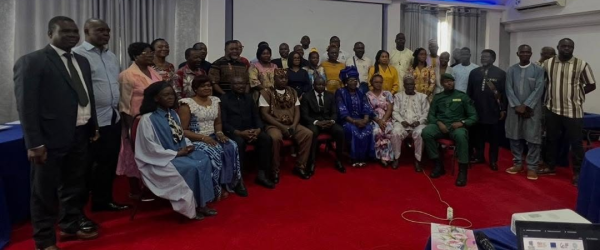
In Douala, INADES-Formation Cameroon is participating in the development of the national document for the United Nations Decade of Family Farming (UNDFF 2019–2028). Working alongside government authorities, farmers’ organizations, and development partners, the institution is contributing its expertise and experience to promote more resilient, inclusive, and sustainable family farming.
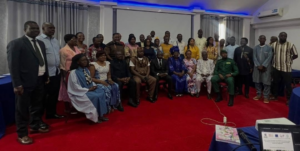
The future of family farming in Cameroon has been the focus of discussions taking place in Douala since September 16, 2026. Over the course of three days, institutional stakeholders, farmers’ organizations, civil society, and technical and financial partners are collaborating to draft the national reference document for the United Nations Decade of Family Farming (UNDFF 2019–2028). INADES-Formation Cameroon is actively participating in this strategic initiative, in keeping with its commitment to promoting family farming and sustainable rural development.
As a representative of civil society, INADES-Formation Cameroon contributes to these discussions alongside several organizations, including the Network of Development Movements and Associations (RMD), MBOSCUDA, UNAPROCAM, JVE, RADD, COSADER, and SAILD. Its participation is part of a multisectoral consultation process aimed at giving voice to the concerns of family farms and promoting strategic directions tailored to the realities of Cameroonian producers.
Expertise in Support of Family Farming
Through its experience in supporting family farms, promoting agroecology, building the capacity of rural communities, and highlighting farmers’ initiatives, INADES-Formation Cameroon helps enrich the discussion on the drivers of transformation in family farming.
The key challenges include promoting sustainable production systems, strengthening producers’ autonomy, and ensuring that women and young people are better taken into account in agricultural development policies. This contribution aligns with the institution’s vision, which places family farms at the heart of food security and food sovereignty.
The initiative also brings together farmers’ organizations, including the National Confederation of Farmers’ Organizations of Cameroon (CNOP-CAM), the National Platform of Professional Agro-Forestry-Pastoral Organizations of Cameroon (PLANOPAC), and the Regional Platform of Farmers’ Organizations of Central Africa (PROPAC). AFDI-Cameroon and FAO are among the international partners participating. Government agencies, including MINADER, MINFOF, MINEPIA, MINEPAT, MINPROFF, MINJEC, and MINEPDED, as well as decentralized local governments and researchers from IRAD, are also contributing.
A Roadmap to Address the Challenges Facing Family Farms
The discussions focus on the main obstacles to the development of family farming: difficulties in accessing financing and markets, land tenure insecurity, the effects of climate change, promoting local produce, and building the capacity of farmers’ organizations. The effective participation of women and youth in agricultural value chains is also a major concern.
Beyond the assessment, stakeholders aim to develop an inclusive, realistic national document accompanied by appropriate financing mechanisms. This document should promote the coordination of interventions and create conditions conducive to the consolidation of family farms, which are a pillar of market supply and the national economy.
For INADES-Formation Cameroon, this consultation represents an opportunity to strengthen dialogue among civil society organizations, government authorities, and farmer stakeholders, as well as to promote recognition of the strategic role of family farms in transforming food systems.
Scheduled to conclude on September 18, 2026, the workshop is expected to result in a consensus-based roadmap to accelerate the implementation of the Decade’s guidelines in Cameroon. This vision calls for collective and sustained action to make family farming a true driver of food sovereignty, climate resilience, and rural development.
Marguerite MOMHA, Communication INADES-Formation Cameroun