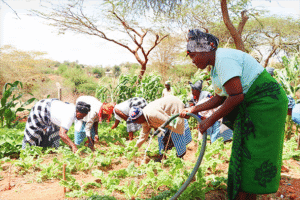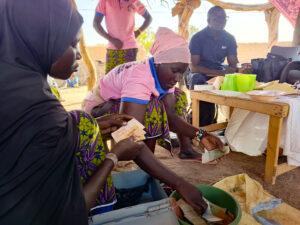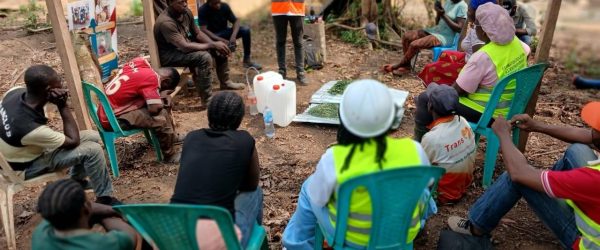
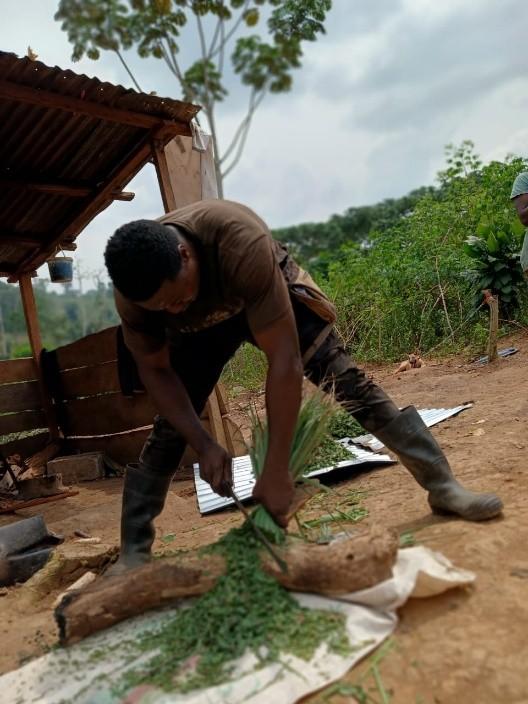
The Okoa Maria pilot farm was buzzing with activity on Wednesday, January 28, 2026. Farmers, farm managers and members of the local community gathered to take part in a hands-on training course on the preparation of a sophisticated biopesticide, an ecological alternative to chemical pesticides. This initiative is part of the Pôle de connaissances pour l’Agriculture Biologique et l’Agroécologie en Afrique project, of which INADES-Formation Cameroun is one of the implementing organizations.
Conducted by YENE Zacharie Hervé, micro-intervention leader, the aim of the session was to build the capacities of agricultural players in sustainable practices, capable of improving yields while preserving the environment and human health.
A natural solution to agricultural challenges
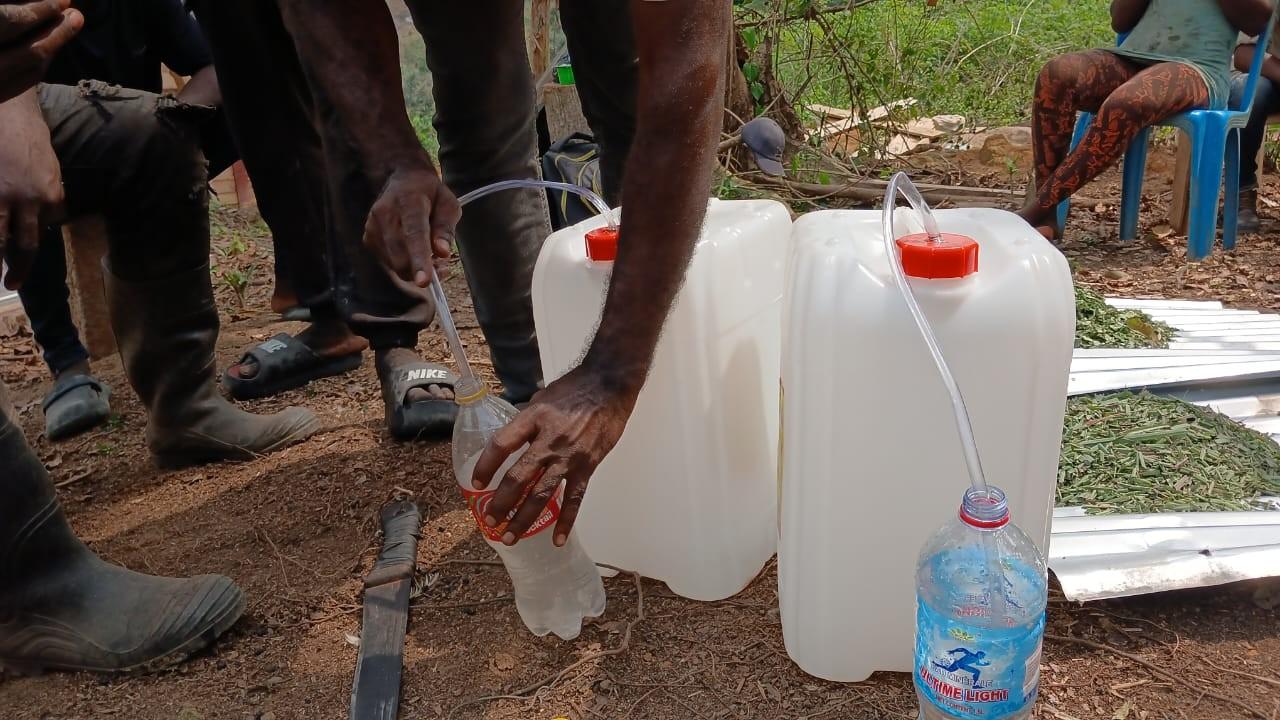
At the heart of the training program: the manufacture of a biopestifuge using locally available natural ingredients. This solution aims to protect crops against pests without resorting to chemical inputs that are often costly and harmful to the soil. Supported by demonstrations, participants learned about the different stages of preparation, appropriate dosages and application methods for crops and livestock. The participative approach enabled everyone to handle the components and ask practical questions linked to their realities in the field.
For the trainer, this represents much more than a simple transfer of skills. “The sophisticated biopestifuge we are presenting today is a concrete response to the problems of soil degradation and the effects of chemicals on health. Our ambition is to make growers more self-sufficient through natural, effective and economical solutions”, explains YENE Zacharie Hervé.
It also emphasizes that these practices are in line with the agro-ecological approach, which favors the balance of ecosystems and the development of local resources.
Responsive and committed producers
Throughout the session, the interest of participants was palpable. For many, the training was timely in a context of rising pesticide costs and heightened environmental concerns.
“We often used chemicals without measuring their consequences. Today, I understand that it’s possible to protect my crops in a different way, while reducing the risks for my family and my customers”, confides Madeleine, a local vegetable grower.
Ruth, manager of the pilot farm, is equally enthusiastic: “This training marks an important step for our farm. Biofertilizers and biopesticides don’t just benefit crops; they also improve the quality of animal feed and contribute to a healthier environment.”
The benefits of biofertilizers for a sustainable agricultural system
Beyond pest control, participants were also made aware of the benefits of biofertilizers, presented as essential allies in restoring soil fertility. Unlike chemical fertilizers, these natural fertilizers promote biological activity in the soil, improve its structure and boost plant resistance to disease.
For the trainer, the combined adoption of biofertilizers and biopestifuges makes for a more resilient agriculture. “When the soil is alive, the plant is stronger. And when we protect this plant with natural solutions, we create a virtuous circle that benefits the entire production chain”, he explains.
A response to health and environmental challenges
This initiative comes at a time when the transition to sustainable food systems is becoming a priority. The excessive use of chemical pesticides is regularly criticized for its impact on biodiversity, water quality and public health.
By training producers in ecological alternatives, INADES-Formation Cameroun and its partners aim to encourage a gradual change in farming practices. “Before, I thought organic farming was complicated or reserved for large farms. But today, I see that we can do it with what we have here”, testifies participant Claudine Essama.
One of the key messages of the day was the notion of autonomy. Producing one’s own inputs not only reduces expenses, but also limits dependence on sometimes unstable commercial circuits.
Discussions also highlighted the importance of capitalizing on knowledge, so that beneficiaries can in turn pass on these practices to their communities. “Our role doesn’t end with this training. We intend to rapidly experiment with this method and share it with other producers”, assures a young farmer present at the workshop.
A further step towards agro-ecological transition
Through this activity, the Pôle de connaissances pour l’agriculture biologique et l’agroécologie en Afrique project is pursuing its ambition to build agricultural systems capable of meeting climatic, economic and social challenges.
Okoa Maria’s training illustrates the growing importance of micro-interventions as levers for rural transformation. By focusing on local, sustainable solutions, these initiatives help to secure livelihoods while protecting natural resources.
As the session drew to a close, the participants left the farm with a shared feeling of having acquired a useful, forward-looking skill.. “What we’ve learned today can really change the way we produce. It’s a step forward for our health, for our soil and for future generations, concludes one participant.
At Okoa Maria, the preparation of this sophisticated biopesticide was more than just a technical exercise; above all, it symbolized a further step towards more responsible agriculture, where innovation rhymes with respect for nature.
Click on this link to access the data sheet on the manufacture of sophisticated biofertilizer
TECHNICAL DATA SHEET FOR THE MANUFACTURE OF A SOPHISTICATED FERTILIZING BIO-INTRANT
MARGUERITE MOMHA, Communication Officer INADES-Formation Cameroun